



£25.00
18 in stock
Handcrafted Amazonian Ceremonial Tool • Madre Tahuari Wood • Traditional Hapé Heritage
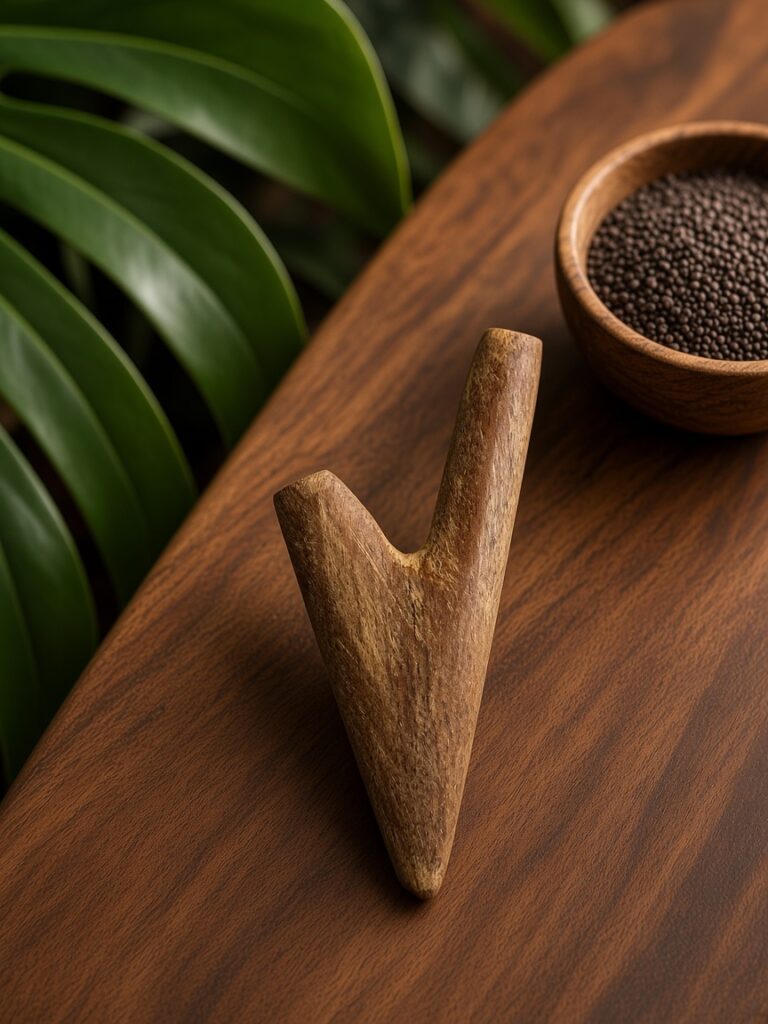
This beautifully crafted Madre Tahuari Kuripe is a traditional Amazonian-style self-applicator associated with Hapé and Rapé ceremonial traditions.
The Kuripe is traditionally recognised by its distinctive V-shaped design, created to connect the mouthpiece with the opposite end of the applicator. Within Amazonian traditions, the Kuripe is regarded not simply as a functional object, but as a personal ceremonial tool associated with intention, breath and ritual practice.
Madre Tahuari Wood
Madre Tahuari is a traditional name associated with Tahuari trees found throughout parts of the Amazon and South America. Tahuari woods are known for their dense, durable character and distinctive natural appearance, making them particularly suited to handcrafted objects.
Botanical sources identify Handroanthus serratifolius among the species known by Tahuari-related names in the Amazon, although regional names can refer to more than one species.
The natural grain and individual characteristics of the wood mean that every Kuripe will have its own unique appearance.
Traditional Ceremonial Significance
Kuripes have become closely associated with the wider Hapé/Rapé traditions of the western Amazon.
In traditional contexts, Hapé is regarded by various Indigenous communities as a ceremonial plant preparation, with practices and meanings differing between peoples and lineages. The Kuripe serves as the personal self-applicator, while the longer Tepi is traditionally associated with one person serving another.
Traditional ceremonial associations can include:
– Grounding
– Presence and awareness
– Prayer and intention
– Spiritual preparation
– Ceremonial cleansing
– Connection with traditional Amazonian plant practices
– Respect for Indigenous botanical traditions
These descriptions refer to cultural and traditional associations only and are not medical or scientifically established claims.
A Personal Ceremonial Tool
Unlike a Tepi, which traditionally involves two people, a Kuripe is designed as a personal applicator.
Its compact size makes it a distinctive object for collectors of Amazonian handicrafts, ethnobotanical artefacts and ceremonial tools.
Traditional Kuripes may be made from materials including wood, bamboo, bone or other natural materials, with individual makers and communities developing their own styles and decorative traditions.
Collector’s Information
Material: Madre Tahuari Wood
Type: Traditional Kuripe / Hapé Applicator
Style: Amazonian handcrafted
Design: V-shaped self-applicator
Price: £25.00
Each piece may display natural variations in:
– Wood grain
– Colour
– Texture
– Shape
– Hand-finishing
– Natural markings
These variations are part of the character of a handcrafted natural-wood piece, meaning no two pieces need be exactly alike.
Cultural Heritage
The Kuripe forms part of a wider tradition of Amazonian ceremonial objects connected with Hapé/Rapé practices.
We present this information respectfully as educational and cultural context and do not claim that this object reproduces or represents the specific ceremonial traditions of any particular Indigenous community.
IMPORTANT INFORMATION
This is a traditional ceremonial and cultural artefact.
If used in connection with Hapé/Rapé or tobacco products, customers are responsible for understanding the nature of those substances and complying with all applicable UK laws and regulations.
The cultural references to grounding, cleansing, protection, awareness or spiritual connection describe traditional beliefs and ceremonial associations only. They are not medical, therapeutic or scientifically established claims.
This product is not a medicine and is not intended to diagnose, treat, cure or prevent any illness or medical condition.
Keep securely stored away from children and animals.
Respect the Tradition
We encourage customers to approach Amazonian ceremonial artefacts with respect for their Indigenous origins, cultural significance and the communities who have maintained these traditions for generations.